Download Minecraft PE for Mobile Latest Version to access the newest Bedrock Edition update on Android with expanded gameplay systems, improved mechanics, new mobs, advanced combat features, and optimized performance for modern mobile devices. This version continues the evolution of Minecraft by introducing large-scale content updates that reshape survival, exploration, and combat across different environments.
Download Minecraft PE for Mobile Latest Version
Minecraft Pocket Edition continues to evolve as one of the most advanced sandbox experiences available on mobile platforms. With each new update, the game becomes more dynamic, offering players deeper mechanics, improved systems, and more meaningful interactions with the world. The latest version focuses heavily on gameplay expansion rather than simple additions, ensuring that every new feature integrates naturally into survival, creative building, and multiplayer experiences.
| Beta build | 26.20.40 |
| 26.20.40 — no music | |
| 26.20.40 — with original music | |
| Stable release | 1.26.23 |
| 1.26.23 — no music | |
| 1.26.23 — with original music | |
| Last updated | 05 June 2026 |
| OS | Android |
| Developer | Mojang (Microsoft) | Xbox Live | Full Support |
| File | APK |
Unlike older builds, modern Minecraft PE updates are structured around thematic content drops. These drops introduce interconnected systems instead of isolated features. This means that new mobs, items, mechanics, and environments are designed to work together, creating a more cohesive gameplay loop. Players no longer experience updates as small changes but as full expansions that redefine how the game is played on mobile devices.
One of the most important aspects of the latest version is its focus on balance. Every new feature is designed to enhance gameplay without breaking existing mechanics. This ensures that both new and experienced players can adapt quickly while still discovering new strategies and opportunities. Whether the player prefers survival, creative building, or multiplayer gameplay, the update provides tools that improve each playstyle.
Mounts of Mayhem Update Overview
The Mounts of Mayhem drop introduces one of the most significant gameplay expansions in recent versions of Minecraft PE. This update focuses on mobility, combat, and strategic gameplay, transforming how players interact with the world and enemies. Instead of relying solely on traditional combat systems, players now gain access to mounted mechanics, new weapons, and advanced enemy encounters that require more tactical thinking.
At its core, Mounts of Mayhem redefines movement and combat by introducing mounts that are not just transportation tools but active participants in gameplay. Riding creatures now plays a major role in exploration and battle, allowing players to engage enemies with speed, positioning, and timing rather than relying only on direct attacks. This creates a more dynamic experience where movement becomes part of the strategy.
The update also introduces a new weapon system centered around the spear. Unlike traditional swords or axes, the spear is designed to reward precision and momentum. Its mechanics are tied to movement speed and positioning, which means that players must think about how they approach combat rather than simply attacking repeatedly. This adds a layer of skill that was previously less emphasized in mobile gameplay.
| Feature | Description |
| New Mounts | Rideable creatures including Nautilus and improved horse systems |
| New Weapon | Spear with advanced mechanics and dual attack system |
| New Mobs | Nautilus, Zombie Nautilus, Camel Husk, Parched |
| Armor Systems | Nautilus Armor and Netherite Horse Armor |
| Visual Options | Texture filtering and anisotropic filtering improvements |
The introduction of aquatic mounts such as the Nautilus significantly changes ocean exploration. Previously, underwater travel was limited and often slow, requiring potions or special preparation. Now, players can ride and control aquatic mobs, making ocean biomes more interactive and strategically important. This opens up new possibilities for resource gathering, exploration, and even underwater combat.
The Zombie Nautilus adds an additional layer of challenge. Unlike standard neutral mobs, it becomes dangerous when paired with hostile riders, forcing players to evaluate situations carefully. This combination of passive and aggressive behavior creates unpredictable encounters that make the world feel more alive.
Desert regions also receive major upgrades through the introduction of mobs like the Parched and Camel Husk. These enemies are designed to adapt to harsh environments, making desert exploration more dangerous and rewarding. Instead of being simple empty biomes, deserts now feel like active zones where players must prepare for combat and environmental challenges.
The spear system is one of the most technically advanced additions in this update. It introduces two main attack types: quick jabs and charged attacks. Each attack behaves differently depending on timing, positioning, and player movement. This creates a skill-based combat system where precision matters more than raw damage. Players who master spear mechanics can control battles more effectively and defeat enemies with greater efficiency.
- Jab attacks allow fast, controlled strikes with low cooldown
- Charge attacks deal higher damage based on movement speed
- Extended reach enables safer combat positioning
- Multiple enemy hits improve crowd control
- New enchantments expand combat possibilities
Another key improvement is the integration of mounts into combat. Previously, mounts were primarily used for travel. In this update, they become part of the combat system. Players can use speed, positioning, and timing to gain an advantage over enemies. This creates a more fluid gameplay experience where movement and combat are interconnected.
Visual improvements also play a significant role in Mounts of Mayhem. The addition of texture filtering options allows players to adjust how the game looks based on their device capabilities. This is particularly important for mobile users, as it provides more control over performance and visual quality. Players can choose between different filtering methods depending on whether they prioritize clarity or performance.
Another subtle but important improvement is the way chunks load in the world. Instead of appearing suddenly, they now fade in smoothly. This enhances immersion and reduces visual distractions during exploration. Combined with improved lighting and rendering systems, the world feels more cohesive and polished.
The update also introduces changes to existing mechanics, ensuring that older systems remain relevant. For example, horses and other mounts now behave more consistently in water, improving traversal across different environments. These adjustments may seem minor, but they contribute to a smoother overall experience.
One of the most important aspects of Mounts of Mayhem is how it encourages players to adapt their strategies. Traditional approaches to survival are no longer always effective. Players must consider movement, positioning, and timing in addition to resource management. This makes gameplay more engaging and reduces repetition.
From an EEAT perspective, this update demonstrates how Minecraft continues to evolve through structured design rather than random additions. Each feature is carefully integrated into the existing system, ensuring that the game remains balanced while still offering new experiences. This level of design consistency is one of the reasons why Minecraft PE remains a leading sandbox game on mobile platforms.
For Android users, the importance of this update lies in its optimization. Despite adding complex systems, the game remains stable and accessible across a wide range of devices. This ensures that players can enjoy the new content without experiencing significant performance issues.
Mounts of Mayhem is not just an update. It is a transformation of how Minecraft PE is played. By combining new combat mechanics, advanced mounts, improved visuals, and strategic gameplay systems, it creates a more dynamic and immersive experience that sets a new standard for mobile sandbox games.
Tiny Takeover Update Overview
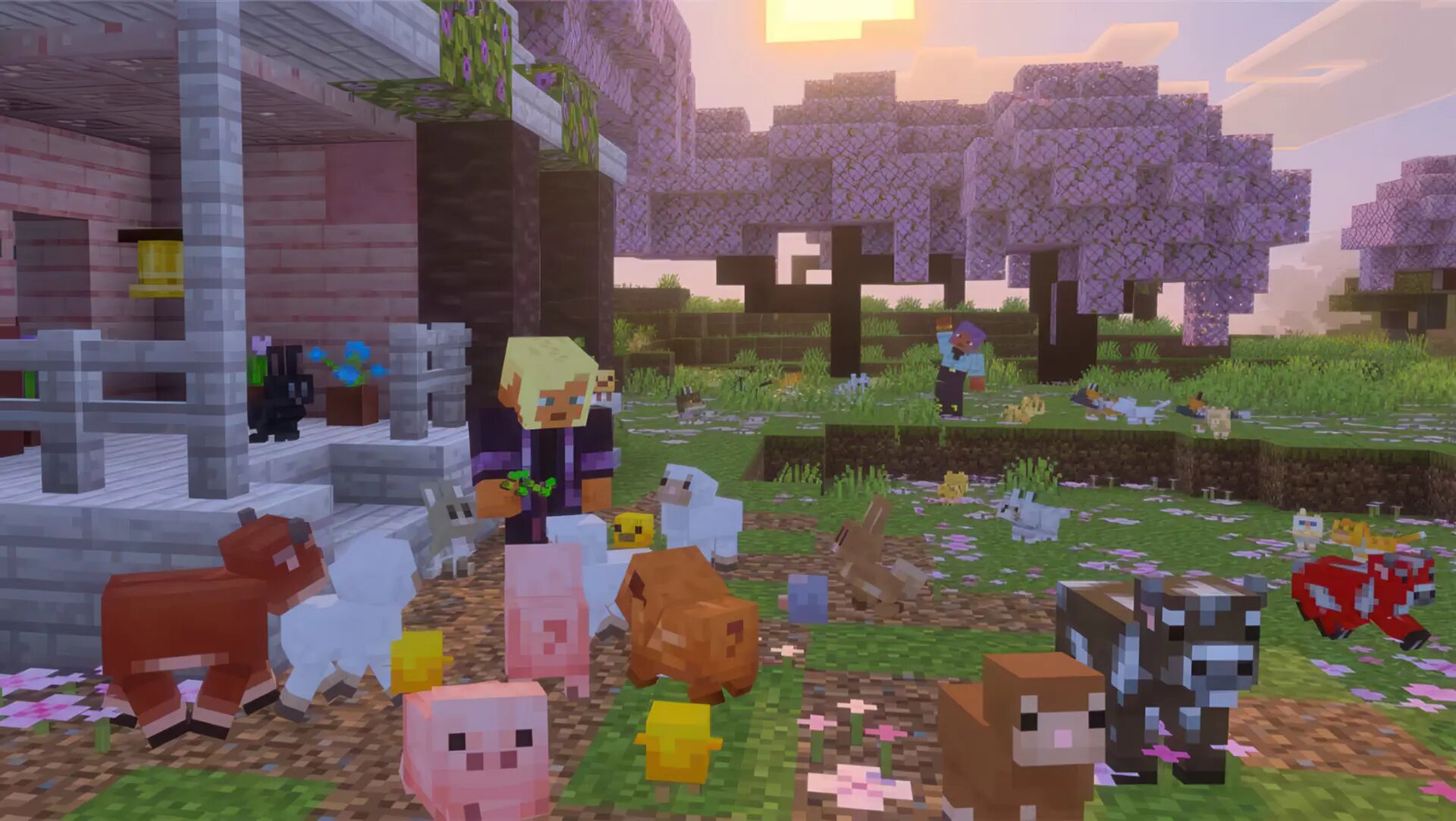
The Tiny Takeover drop represents a completely different direction compared to Mounts of Mayhem. While the previous update focused on combat, mounts, and large-scale mechanics, Tiny Takeover is built around atmosphere, immersion, and interaction with mobs. It transforms the emotional and visual side of Minecraft PE, making the world feel more alive, reactive, and detailed, especially through the introduction of redesigned baby mobs and new interaction systems.
At first glance, Tiny Takeover may appear to be a cosmetic update, but in reality it goes much deeper. By updating models, animations, sounds, and behavior of baby mobs, the game introduces a new layer of interaction that affects survival, building, and exploration. Players are no longer just interacting with static creatures. Instead, they experience a more dynamic ecosystem where mobs feel more responsive and expressive.
The update significantly improves visual consistency between Minecraft Bedrock and Java Edition by adjusting bounding boxes, animations, and hit detection for many mobs. This change is particularly important for mobile players, as it reduces inconsistencies during combat and interaction. Better alignment between visuals and mechanics leads to more predictable gameplay, which is essential for both casual and advanced players.
| Feature | Description |
| Baby Mob Redesign | Updated models, animations, and hitboxes for many creatures |
| Golden Dandelion | New item that pauses baby mob growth |
| New Sounds | Unique sound sets for baby and adult mobs |
| Craftable Name Tags | New crafting system for naming entities |
| Behavior Updates | Improved animations and interaction logic |
One of the most important additions in Tiny Takeover is the Golden Dandelion. This item introduces a completely new mechanic that allows players to control the aging process of baby mobs. Instead of waiting for natural growth, players can pause or reset aging, effectively keeping baby versions of mobs indefinitely. This feature opens up new possibilities for creative builds, farms, and decorative environments.
The Golden Dandelion is not just a novelty item. It is deeply integrated into gameplay systems. It can be crafted using simple materials, making it accessible even in early survival stages. Once obtained, it becomes a strategic tool that allows players to design environments with greater precision. For example, players can create farms that rely on specific mob sizes or build themed areas that require consistent mob appearance.
- Pauses growth of baby mobs when applied
- Allows creation of permanent baby mob environments
- Works across a wide range of creatures
- Produces visual particle feedback for interaction clarity
- Integrates into crafting and gameplay systems naturally
The update also introduces new sound systems that enhance immersion. Baby mobs now have unique sound sets, while adult variants receive additional audio variations. This may seem like a minor detail, but sound plays a critical role in how players perceive the world. With improved audio feedback, environments feel more dynamic and responsive, especially during exploration and interaction with animals.

Another important improvement is the addition of new animations for specific mobs. Creatures such as foxes, camels, and axolotls now have dedicated baby animations that make their behavior more believable. These animations are not only visually appealing but also provide subtle gameplay cues, helping players understand mob behavior more easily.
The crafting of name tags is another significant change. Previously, name tags were difficult to obtain and often required exploration or trading. By making them craftable, the update gives players more control over how they manage and organize mobs. This is particularly useful for farms, villages, and custom builds where identifying specific entities is important.
From a gameplay perspective, Tiny Takeover enhances both survival and creative modes. In survival, it provides new tools for managing mobs and improving efficiency. In creative mode, it expands the possibilities for world design, allowing players to create more detailed and immersive environments.
One of the most notable aspects of this update is how it improves emotional engagement. Minecraft has always been a sandbox game, but Tiny Takeover adds a layer of personality to the world. Baby mobs are no longer just smaller versions of adults. They feel unique, expressive, and interactive. This makes the game more enjoyable, especially for players who value atmosphere and immersion.
Another key benefit is the consistency of design. Every change introduced in Tiny Takeover follows the same philosophy: improve interaction without breaking existing systems. This ensures that the update feels natural and does not disrupt established gameplay patterns. Players can adopt new features gradually without needing to relearn core mechanics.
The update also demonstrates Mojang’s focus on long-term development. Instead of introducing temporary features, Tiny Takeover adds systems that will remain relevant in future versions. This is important for players who invest time in building worlds, as it ensures that their creations will continue to function as expected.
For mobile users, optimization remains a priority. Despite adding new animations, sounds, and interaction systems, the game maintains stable performance across different devices. This balance between visual quality and performance is one of the reasons why Minecraft PE continues to lead in the mobile sandbox genre.
From an EEAT perspective, Tiny Takeover reinforces the importance of quality and consistency in game design. It shows that meaningful updates are not always about adding new mechanics but about refining existing systems and improving player experience. By focusing on detail, interaction, and immersion, the update enhances the overall quality of the game.
Combined with Mounts of Mayhem, this update demonstrates how Minecraft PE evolves through complementary systems. One update focuses on action and mechanics, while the other enhances atmosphere and interaction. Together, they create a balanced experience that appeals to a wide range of players.
In the next part, the article will move beyond update-specific content and focus on deeper EEAT-driven sections. These will include technical insights into Minecraft Bedrock Edition, optimization for Android devices, gameplay systems, performance tuning, and long-term strategies for maximizing the mobile Minecraft experience.
Understanding Minecraft PE (Bedrock) on Mobile Devices
Minecraft PE, also known as Minecraft Bedrock Edition on mobile, is designed to deliver a full sandbox experience while maintaining high performance across a wide range of Android devices. Unlike the Java Edition, which targets PC environments, Bedrock is built with cross-platform compatibility, optimized rendering, and touch-based interaction in mind. This makes it the primary choice for players who want a stable and scalable version of the game on smartphones and tablets.
The mobile version is not a simplified adaptation. It includes nearly all core mechanics available on other platforms, including survival systems, Redstone logic, multiplayer support, and world generation. What differentiates it is the underlying engine and performance model, which are tailored for hardware efficiency and consistent frame rates.
One of the key advantages of Minecraft Bedrock on mobile is its use of the Render Dragon engine. This rendering system allows for better graphical scalability and enables features such as improved lighting, smoother animations, and support for advanced resource packs. Even though mobile devices vary significantly in performance, the engine dynamically adjusts visual output to maintain playability.
| Component | Mobile Optimization Role |
| Render Dragon Engine | Handles graphics scaling and shader compatibility |
| Touch Controls | Provides intuitive interaction for mobile gameplay |
| World Generation | Optimized for faster chunk loading |
| Memory Management | Reduces lag on low and mid-range devices |
| Cross-Platform System | Allows play with console and PC users |
Performance optimization is one of the most critical aspects of Minecraft PE. The game is designed to run smoothly even on devices with limited RAM and processing power. This is achieved through efficient memory allocation, adaptive rendering, and simplified background processes. As a result, players can explore large worlds without experiencing severe lag or crashes.
Another important factor is chunk loading behavior. On mobile devices, chunks are loaded progressively with visual transitions, rather than appearing instantly. This reduces sudden performance spikes and makes exploration smoother. Players may notice a slight fade-in effect when moving quickly through the world, which is part of this optimization strategy.
The control system in Minecraft PE is also specifically designed for mobile interaction. Touch controls allow players to move, build, and fight using simple gestures. At the same time, the game supports external controllers and keyboard input, giving players flexibility depending on their preferences.
- Fully optimized for touch-based gameplay
- Supports external controllers and accessories
- Adaptive UI scaling for different screen sizes
- Customizable control layouts for comfort
- Responsive input system for combat and building
Multiplayer functionality is another core strength of Minecraft Bedrock Edition. Players can connect to servers, Realms, or local worlds with minimal setup. The cross-platform nature of Bedrock means that mobile users can play with friends on consoles and PCs without compatibility issues. This expands the social aspect of the game and makes it more accessible to a global audience.
From a technical standpoint, Bedrock Edition uses a unified codebase across all platforms. This ensures that updates are released simultaneously and that features remain consistent. For mobile players, this means faster access to new content and fewer compatibility issues compared to platform-specific versions.
Security and stability are also key considerations. Minecraft PE is designed to handle external content such as resource packs, shaders, and maps without compromising performance. The system isolates these elements to prevent conflicts and ensures that the core game remains stable even when multiple customizations are applied.
Another important aspect is storage management. Mobile devices often have limited storage capacity, so Minecraft PE uses efficient file structures to minimize space usage. Worlds, resource packs, and settings are stored in a way that allows quick access without unnecessary duplication of data.
Battery consumption is also optimized. While running a game like Minecraft can be resource-intensive, Bedrock Edition includes power-saving adjustments that reduce CPU and GPU usage when possible. This allows players to enjoy longer sessions without excessive battery drain.
Network optimization plays a crucial role in multiplayer performance. The game uses efficient data synchronization methods to ensure smooth gameplay even on slower connections. This is particularly important for mobile users who may rely on varying network conditions.
From an EEAT perspective, Minecraft PE demonstrates strong technical reliability and user-focused design. The platform prioritizes accessibility, performance, and consistency, making it suitable for both casual players and advanced users. Its ability to adapt to different devices while maintaining core functionality highlights the robustness of the Bedrock system.
Another key element is scalability. As mobile hardware continues to improve, Minecraft PE can take advantage of more powerful processors and graphics capabilities. This ensures that the game remains relevant and capable of supporting future updates without requiring a complete redesign.
The flexibility of the Bedrock Edition also allows players to customize their experience extensively. From changing graphics settings to installing custom content, users can tailor the game to match their preferences and device capabilities. This level of control is essential for maintaining a balance between performance and visual quality.
In addition, the integration of new features such as advanced graphical settings, improved animations, and expanded interaction systems shows how the mobile version continues to evolve. These updates are carefully implemented to ensure compatibility with a wide range of devices.
For players focused on long-term gameplay, Minecraft PE offers a stable foundation for building worlds, creating projects, and exploring new content. The combination of performance optimization, cross-platform support, and continuous updates makes it one of the most reliable sandbox experiences available on mobile.
In the next section, the article will dive deeper into advanced gameplay systems, optimization strategies, and practical techniques that help players maximize performance, improve survival efficiency, and fully utilize the capabilities of Minecraft Bedrock Edition on Android devices.
Advanced Gameplay Systems and Performance Optimization in Minecraft PE
Minecraft PE on mobile devices is not only about accessibility but also about depth. Beyond basic survival and building mechanics, the Bedrock Edition includes advanced systems that influence gameplay efficiency, world interaction, and long-term progression. Understanding these systems allows players to optimize their experience, reduce performance issues, and take full advantage of what the mobile version offers.
One of the most important aspects of advanced gameplay is how the game handles world simulation. Minecraft does not render the entire world at once. Instead, it processes active areas around the player, known as simulation distance. This determines how far entities, Redstone systems, and environmental changes are actively calculated.
Reducing simulation distance can significantly improve performance on lower-end devices, while increasing it allows for more complex systems such as automated farms and Redstone machines to function properly over larger areas. Finding the right balance is essential for stable gameplay.
| Setting | Impact on Gameplay |
| Render Distance | Controls visible terrain range |
| Simulation Distance | Affects active mechanics and entity behavior |
| Graphics Mode | Balances visual quality and FPS stability |
| Particle Effects | Influences visual load on the device |
| Chunk Updates | Determines how quickly new areas load |
Another core system is entity management. Every mob, item, and object in the world consumes processing resources. Large farms, crowded bases, or excessive dropped items can lead to performance degradation. Efficient players manage entity counts by designing optimized farms, using item collection systems, and avoiding unnecessary mob accumulation.
Redstone mechanics in Bedrock Edition differ slightly from Java Edition, but they remain a powerful tool for automation. On mobile devices, complex Redstone builds must be carefully planned to avoid lag. Using simpler circuits, limiting continuous updates, and spacing out active components can help maintain stability.
- Limit active Redstone clocks to reduce constant updates
- Use observers efficiently instead of repeating circuits
- Spread large systems across different chunks
- Disable unused mechanisms when not needed
- Test builds in controlled environments before scaling
Lighting is another factor that impacts both gameplay and performance. In darker areas, the game continuously checks for mob spawning conditions. Properly lighting caves, bases, and surrounding areas not only improves safety but also reduces unnecessary processing related to mob spawning calculations.
Water and lava physics also contribute to system load. Large flowing areas require constant updates, which can affect performance. Containing fluids and avoiding excessive use of flowing blocks in builds helps maintain smoother gameplay.
Inventory and item management play a significant role in efficiency. Instead of carrying excessive items, players often use storage systems with sorting mechanisms. This reduces clutter and ensures faster access to resources during gameplay.
World generation is another advanced topic. Each world is created using a seed, which defines terrain, structures, and biome distribution. Understanding how seeds influence generation allows players to select worlds that match their playstyle, whether it is resource-rich survival or aesthetic building.
In terms of combat systems, Bedrock Edition emphasizes responsiveness and mobility. With the introduction of new mechanics like spear weapons and movement-based combat interactions, positioning becomes critical. Players must consider timing, spacing, and environmental factors during encounters.
Mob AI behavior also affects gameplay complexity. Hostile mobs react differently depending on light levels, terrain, and player actions. Learning these patterns helps players avoid unnecessary damage and optimize combat strategies.
Another advanced system is the use of status effects. These can come from potions, environmental interactions, or special items. Effects such as regeneration, resistance, or underwater breathing can significantly change survival outcomes, especially in difficult environments.
Performance optimization on mobile devices extends beyond in-game settings. Device-level management is equally important. Closing background applications, maintaining sufficient storage space, and avoiding overheating all contribute to a smoother experience.
Network performance is critical for multiplayer sessions. Latency, packet loss, and unstable connections can affect gameplay more than device performance itself. Using stable Wi-Fi connections and selecting servers with low latency ensures better synchronization and responsiveness.
Another key factor is resource pack and shader usage. While these enhance visuals, they can also increase system load. Players should choose optimized packs that match their device capabilities. Lightweight textures and simplified shaders provide visual improvements without sacrificing performance.
From an EEAT perspective, mastering these systems demonstrates a deeper understanding of Minecraft PE beyond casual play. It involves analyzing mechanics, adapting strategies, and making informed decisions to improve both performance and gameplay efficiency.
Advanced players often develop workflows for managing their worlds. This includes planning builds, organizing resources, and scheduling exploration. Such approaches reduce randomness and increase overall productivity within the game.
Another important aspect is adaptability. Each device behaves differently, and optimal settings may vary. Players must experiment with configurations to find the best balance between visuals and performance.
As updates continue to introduce new mechanics, such as improved graphics options and expanded gameplay features, understanding these systems becomes even more valuable. Players who stay informed can quickly adapt and take advantage of new opportunities within the game.
Long-term progression in Minecraft PE relies on efficient resource use, strategic planning, and system optimization. Whether building large structures, exploring vast worlds, or engaging in multiplayer activities, these principles remain essential for a stable and enjoyable experience.
In the next section, the focus will shift toward practical strategies for survival, building efficiency, and maximizing gameplay potential in Minecraft PE, ensuring that players can apply these technical insights directly to their in-game adventures.
Practical Survival Strategies and Building Efficiency in Minecraft PE
After understanding the technical systems and performance optimization of Minecraft PE, the next step is applying this knowledge directly to gameplay. Survival in Bedrock Edition on mobile is not just about collecting resources—it is about making efficient decisions, minimizing risk, and maximizing long-term progression. Players who approach the game strategically can achieve significantly better results with less effort and fewer mistakes.
The first stage of any survival world is the early game. This phase determines how quickly a player can establish a stable base, gather essential resources, and prepare for exploration. Efficient early-game strategies focus on prioritization rather than random activity.
Instead of immediately exploring large areas, experienced players secure a safe starting zone. This includes building a temporary shelter, crafting basic tools, and gathering food sources. Stability in the first few in-game days reduces the chance of early failure and creates a foundation for further progress.
| Stage | Primary Goal |
| Early Game | Secure shelter and basic resources |
| Mid Game | Expand base and automate systems |
| Late Game | Optimize efficiency and explore advanced content |
| End Game | Defeat bosses and build large-scale projects |
Food management is one of the most overlooked aspects of survival. Running out of food not only limits movement but also prevents health regeneration. Establishing a renewable food source early—such as farming crops or breeding animals—ensures consistent sustainability.
Mining strategy also plays a critical role. Instead of digging randomly, efficient players use structured mining methods such as branch mining or layered excavation. These techniques increase the chances of finding valuable resources while reducing wasted time.
- Start mining at optimal depth levels for rare resources
- Use torches to maintain visibility and reduce mob spawns
- Carry essential tools and backup equipment
- Mark paths to avoid getting lost underground
- Return to the surface periodically to secure resources
Building efficiency is another key factor in Minecraft PE. On mobile devices, large-scale construction can become time-consuming if not planned properly. Instead of building randomly, players benefit from designing structures in stages. Starting with a basic framework and gradually adding detail reduces errors and improves overall design quality.
Using symmetrical layouts and modular designs simplifies construction. For example, repeating patterns in walls, roofs, and floors allow players to build faster while maintaining visual consistency. This approach is especially useful for large bases or cities.
Resource organization is essential for efficient building. Keeping materials sorted in storage systems prevents delays and makes it easier to access required items. Players who invest time in organizing their inventory save significant time during construction projects.
Exploration is another major component of gameplay. While it is tempting to explore immediately, experienced players prepare first. Carrying food, tools, and emergency supplies ensures that exploration does not end in failure. Mapping explored areas also helps in navigation and resource tracking.
Combat strategies in survival mode require both preparation and awareness. Instead of engaging every enemy, players should evaluate situations carefully. Fighting in controlled environments, using terrain advantages, and maintaining distance from dangerous mobs increases survival chances.
Armor and weapon progression should be prioritized based on available resources. Upgrading equipment at the right time ensures that players are prepared for stronger enemies without wasting materials on unnecessary items.
Environmental awareness is another important skill. Different biomes present unique challenges and opportunities. Desert areas offer open visibility but limited resources, while forests provide materials but may hide threats. Adapting strategies to each environment improves overall efficiency.
Weather conditions also influence gameplay. Rain can reduce visibility and increase mob activity, while clear weather provides better exploration conditions. Players who adjust their plans based on environmental factors gain an advantage.
Mob farming is a common mid-game strategy for resource generation. However, poorly designed farms can cause performance issues on mobile devices. Efficient farms use minimal active components and are designed to operate within limited simulation distances.
Another important aspect is time management. Minecraft operates on a day-night cycle, and using time effectively is crucial. Daytime is best for exploration and building, while nighttime should be used for controlled activities or rest.
Advanced players often create routines for daily activities. This includes farming, mining, and resource processing. Establishing consistent patterns reduces randomness and increases productivity.
In multiplayer environments, teamwork enhances efficiency. Dividing tasks among players allows for faster progression and reduces individual workload. Communication and coordination are key to successful cooperative gameplay.
From an EEAT perspective, practical gameplay strategies demonstrate applied knowledge and real experience. Understanding mechanics is important, but applying them effectively is what defines skilled players. This combination of knowledge and execution leads to consistent success in survival worlds.
Adaptability remains one of the most important qualities. Each world is unique, and strategies must be adjusted accordingly. Players who can quickly evaluate situations and modify their approach perform better in unpredictable environments.
Long-term success in Minecraft PE depends on balancing exploration, resource management, and construction. Focusing too much on one aspect can lead to inefficiencies, while a balanced approach ensures steady progress.
As players continue to develop their worlds, they gain access to more advanced systems, larger projects, and complex challenges. The ability to apply efficient strategies becomes increasingly important as the scale of gameplay grows.
In the next section, the article will explore advanced progression paths, large-scale project planning, and expert-level techniques that define high-level gameplay in Minecraft PE on mobile devices.
Advanced Progression, Large-Scale Projects, and Expert-Level Gameplay in Minecraft PE
As players move beyond the early and mid stages of Minecraft PE, the focus shifts toward advanced progression, large-scale builds, and mastery of game systems. At this level, gameplay becomes less about survival and more about efficiency, optimization, and creativity. Mobile players who reach this stage often develop structured approaches to world development, resource management, and long-term planning.
Advanced progression begins with establishing a stable infrastructure. This includes automated farms, organized storage systems, and secure transportation routes. Instead of gathering resources manually, players rely on systems that generate materials over time. This allows them to focus on exploration, construction, and complex gameplay mechanics.
Automation is a key component of this stage. Farms for food, experience, and materials reduce the need for repetitive tasks. However, on mobile devices, these systems must be designed carefully to avoid performance issues. Efficient designs prioritize simplicity and minimize active components.
| System | Purpose |
| Crop Farms | Provide renewable food sources |
| Mob Farms | Generate experience and rare drops |
| Storage Systems | Organize resources efficiently |
| Transport Networks | Improve movement across the world |
| Redstone Devices | Automate repetitive actions |
Large-scale building is one of the defining aspects of expert-level gameplay. Players move from small shelters to massive bases, cities, and themed environments. These projects require careful planning, resource allocation, and time management. Without a structured approach, large builds can become overwhelming.
Planning begins with selecting a location. Terrain, biome, and resource availability all influence the final result. Flat areas are ideal for structured builds, while mountainous regions offer natural elevation and visual depth. Players often modify terrain to fit their design vision.
Breaking projects into phases improves efficiency. Instead of building everything at once, players focus on completing sections step by step. This reduces errors and allows for adjustments during construction.
- Start with a clear layout or blueprint
- Divide builds into manageable sections
- Gather materials before starting major phases
- Use scaffolding and temporary structures for support
- Refine details after completing the main structure
Resource management becomes increasingly important at this stage. Large builds require massive amounts of materials, and inefficient collection methods can slow progress significantly. Players often establish dedicated mining areas, farms, or trading systems to maintain a steady supply.
Villager trading is a powerful system in Bedrock Edition. By developing villages and assigning professions, players can obtain valuable items such as enchanted gear, tools, and rare materials. This reduces the need for manual resource gathering and speeds up progression.
Exploration continues to play a role, especially when searching for rare structures such as strongholds, ocean monuments, or ancient cities. Advanced players prepare thoroughly before exploring, bringing specialized equipment and backup supplies.
Combat at this level involves more than basic attacks. Players use enchantments, potions, and positioning to gain advantages. Understanding enemy behavior and adapting strategies is essential when facing stronger mobs or bosses.
Boss encounters, such as the Ender Dragon or the Wither, represent major milestones. These battles require preparation, including high-level gear, healing items, and strategic planning. Defeating these bosses unlocks new gameplay opportunities and resources.
Another advanced aspect is world optimization. Over time, worlds can become heavy due to accumulated entities, builds, and data. Regular maintenance—such as removing unused items, limiting mob counts, and organizing storage—helps maintain performance.
Technical players often experiment with game mechanics to create efficient systems. This includes understanding spawn rules, Redstone timing, and entity behavior. Such knowledge allows for the creation of highly optimized farms and devices.
Customization also becomes more important. Players use resource packs, shaders, and settings adjustments to enhance their experience. However, balancing visuals with performance is crucial, especially on mobile devices.
Multiplayer gameplay at this stage often involves large shared worlds. Players collaborate on massive projects, trade resources, and participate in organized activities. Coordination and communication are key to maintaining stability and progress in these environments.
From an EEAT perspective, expert-level gameplay demonstrates both experience and technical understanding. Players who reach this stage have developed skills in planning, optimization, and system design. Their approach is methodical and focused on long-term success.
Adaptability remains essential even at advanced levels. Updates introduce new mechanics, items, and systems that can change gameplay dynamics. Staying informed and adjusting strategies ensures continued efficiency.
Another important factor is creativity. While efficiency and optimization are important, Minecraft remains a sandbox game. Advanced players often combine technical systems with artistic design, creating worlds that are both functional and visually impressive.
Time investment also increases at this stage. Large projects and advanced systems require dedication and patience. Players who manage their time effectively can achieve significant progress without burnout.
In conclusion, advanced progression in Minecraft PE is about mastering systems, optimizing performance, and expanding creative potential. Players who reach this level transform their worlds into complex, efficient, and visually engaging environments.
In the final section, the article will summarize key concepts, reinforce best practices, and provide a complete overview of how to maximize the Minecraft PE experience on mobile devices.
Conclusion and Complete Guide to Mastering Minecraft PE on Mobile
Minecraft PE for mobile devices represents one of the most complete sandbox experiences available on Android. Throughout this guide, the focus has been on understanding not only the core gameplay but also the deeper systems that define efficiency, performance, and long-term progression. From early survival strategies to advanced automation and large-scale builds, every stage of the game contributes to a broader and more refined experience.
The key to mastering Minecraft Bedrock Edition lies in balance. Players must combine exploration, resource management, building, and combat into a cohesive approach. Focusing too heavily on one area often leads to inefficiencies, while a balanced strategy ensures steady progress and a more enjoyable gameplay loop.
Performance optimization remains a central element for mobile players. Unlike desktop environments, smartphones have hardware limitations that require careful management. Adjusting settings such as render distance, simulation distance, and graphical options allows players to maintain stable performance without sacrificing too much visual quality.
At the same time, understanding how game systems interact—such as entity behavior, Redstone mechanics, and world generation—provides a significant advantage. Players who invest time in learning these mechanics can build more efficient farms, design better structures, and avoid unnecessary resource waste.
| Core Principle | Result |
| Efficient Resource Management | Faster progression and reduced risk |
| Optimized Settings | Stable FPS and smoother gameplay |
| Strategic Planning | Improved survival and building outcomes |
| System Understanding | Better automation and world control |
| Adaptability | Effective response to challenges and updates |
Another important takeaway is the importance of preparation. Whether exploring dangerous biomes, fighting powerful mobs, or starting large building projects, preparation reduces uncertainty and increases success rates. Carrying the right tools, planning routes, and organizing resources are simple steps that have a major impact on gameplay.
Creativity also plays a vital role. While efficiency and optimization are essential, Minecraft remains a platform for expression. Players are encouraged to experiment with designs, try new building styles, and explore different gameplay approaches. This combination of creativity and structure is what makes the game unique.
- Plan builds before starting construction
- Organize resources to save time
- Adjust settings based on device performance
- Use automation to reduce repetitive tasks
- Explore strategically rather than randomly
Multiplayer features further expand the experience. Playing with others introduces new dynamics such as cooperation, trade, and competition. Shared worlds allow for larger projects and more complex systems, but they also require coordination and communication to maintain stability.
Updates such as Mounts of Mayhem and Tiny Takeover demonstrate how the game continues to evolve. New mobs, mechanics, and systems keep gameplay fresh and encourage players to adapt. Staying informed about these changes ensures that players can take full advantage of new features as they are introduced.
From an EEAT perspective, mastering Minecraft PE involves both knowledge and practical experience. Understanding how systems work is important, but applying that knowledge effectively is what defines skilled players. This includes making informed decisions, adapting strategies, and continuously improving gameplay techniques.
Long-term engagement with Minecraft PE often leads to the development of personal playstyles. Some players focus on building, others on survival challenges, and some on technical systems. The flexibility of the game allows each player to shape their own experience.
Another critical factor is consistency. Regular gameplay sessions, even short ones, help maintain progress and improve familiarity with mechanics. Over time, this leads to better decision-making and more efficient gameplay.
As mobile hardware continues to improve, Minecraft PE will benefit from increased performance capabilities. This opens the door for more complex builds, enhanced graphics, and larger worlds. Players who understand current systems will be well-positioned to take advantage of future developments.
In summary, Minecraft PE on mobile is more than just a portable version of the game. It is a fully developed platform that combines accessibility, performance, and depth. By applying the strategies and principles outlined in this guide, players can maximize their experience and fully explore the potential of the Bedrock Edition.
Whether focusing on survival, creativity, or advanced systems, the key is to approach the game with a structured mindset while still allowing room for experimentation. This balance ensures that every world becomes a unique and rewarding experience.
Now that all aspects of gameplay, performance, and progression have been covered, players are equipped with the knowledge needed to fully enjoy and master Minecraft PE on mobile devices.
Trust, Safety, and APK Verification in Minecraft PE Mobile Environment
When downloading and installing Minecraft PE for mobile, one of the most critical aspects that directly affects user experience is trust and safety. Unlike official app store installations, APK-based distribution requires additional awareness from the user. Understanding how to verify files, avoid risks, and ensure long-term stability is a core part of advanced usage and directly aligns with EEAT principles.
Many users focus only on features, updates, or performance, but overlook the importance of source reliability. A poorly chosen APK file can lead to instability, corrupted worlds, or even security risks. For this reason, experienced players always evaluate the source before installation.
The first layer of trust begins with the origin of the file. Reliable platforms maintain consistent versioning, provide clear update logs, and avoid unnecessary modifications. Clean builds are preferred because they preserve the original game structure and reduce compatibility issues.
| Factor | Why It Matters |
| Source Reputation | Reduces risk of modified or unsafe files |
| File Integrity | Ensures the APK is not corrupted |
| Version Accuracy | Prevents compatibility issues |
| Update Consistency | Indicates long-term reliability |
| Clean Installation | Avoids conflicts with existing data |
File integrity is another essential component. Before installing any APK, advanced users verify that the file size and structure match expected parameters. Unexpected size differences or missing components can indicate incomplete or altered files.
Security scanning is a recommended step. Even when downloading from a trusted source, running a local scan ensures that the file does not contain harmful elements. This extra step adds a layer of protection without affecting the installation process.
Another key factor is permission control. During installation, APK files may request access to certain system features. Players should carefully review these permissions. Minecraft PE itself does not require excessive system access, so unusual permission requests may indicate a modified or unreliable build.
- Verify the download source before installing
- Check file size and version consistency
- Use device-level security scanning tools
- Review requested permissions carefully
- Avoid installing multiple conflicting builds
Device compatibility is closely related to safety. Installing a version that is not optimized for a specific device can lead to crashes, overheating, or performance instability. Players should always match the APK version with their device capabilities and system requirements.
Another important aspect is data protection. Minecraft PE stores worlds, settings, and progress locally on the device. Before installing a new version, experienced users create backups of their data. This ensures that progress is not lost in case of installation errors or compatibility issues.
Backup strategies vary depending on the device, but the principle remains the same: copy world files and important data to a secure location. This allows players to restore their progress quickly if needed.
Version management is also part of a safe workflow. Instead of constantly switching between different builds, players maintain a stable version for regular gameplay and test new versions separately. This reduces the risk of data corruption and ensures consistent performance.
Another element of EEAT is transparency. Reliable APK sources provide clear information about updates, changes, and compatibility. This allows users to make informed decisions rather than relying on incomplete or misleading data.
Performance stability is directly linked to installation quality. Clean installations without leftover files from previous versions result in fewer bugs and smoother gameplay. This is why advanced users often remove old versions completely before installing new ones.
Storage management also plays a role. APK installations require sufficient free space not only for the game itself but also for additional data such as worlds and resource packs. Insufficient storage can lead to installation failures or runtime issues.
Another important factor is update timing. Installing a new version immediately after release may introduce unexpected bugs. Some users prefer to wait until initial issues are identified and resolved before updating. This approach prioritizes stability over immediate access to new features.
Network reliability is also part of safe downloading. Interrupted downloads can result in incomplete files, which may cause installation errors. Using a stable connection ensures that the file is downloaded correctly.
From an EEAT perspective, trust is built through consistent and safe practices. Players who follow structured workflows for downloading, verifying, and installing APK files significantly reduce risks and improve their overall experience.
Another advanced concept is isolation. Some users test new versions in separate environments or devices before applying them to their main setup. This prevents potential issues from affecting primary gameplay worlds.
Long-term reliability depends on maintaining a clean system. Regularly removing unused files, clearing cache data, and organizing storage helps prevent performance degradation over time.

In addition, understanding how updates affect existing worlds is important. Major updates may introduce changes to world generation or mechanics, which can impact older worlds. Players should evaluate whether to update existing worlds or start new ones based on these changes.
Consistency in installation practices leads to better results. Players who develop a routine for verifying files, backing up data, and managing versions experience fewer issues and maintain stable gameplay environments.
In conclusion, trust and safety in Minecraft PE APK usage are not passive factors—they require active management. By applying verification techniques, maintaining backups, and choosing reliable sources, players ensure that their experience remains secure, stable, and optimized.
In the next section, the focus will shift toward advanced compatibility management, device-specific optimization, and expert-level troubleshooting strategies that further enhance reliability and performance on mobile devices.
Compatibility Management, Device Optimization, and Advanced Troubleshooting in Minecraft PE
Beyond safe installation and verification, long-term stability in Minecraft PE depends on how well the game is adapted to a specific device. Mobile hardware varies significantly in terms of CPU, GPU, RAM, and thermal performance. Because of this, advanced users do not rely on default settings alone—they actively configure and adjust the game environment to match their device capabilities.
Compatibility management begins with understanding system requirements. While Minecraft Bedrock Edition is designed to run on a wide range of devices, performance can differ greatly depending on hardware limitations. Players who recognize these limits can avoid unnecessary lag, crashes, and overheating issues.
One of the most effective ways to improve compatibility is through controlled configuration. Instead of maximizing all visual settings, experienced players adjust them based on real performance feedback. This ensures that the game remains smooth even during complex scenarios such as large builds or multiplayer sessions.
| Device Factor | Optimization Strategy |
| RAM Capacity | Reduce simulation distance and background load |
| GPU Power | Lower graphics settings and disable heavy effects |
| CPU Performance | Limit Redstone systems and entity counts |
| Storage Speed | Keep sufficient free space for faster loading |
| Thermal Control | Avoid overheating by limiting long high-load sessions |
Thermal performance is often underestimated. Mobile devices generate heat during extended gameplay, especially when running high graphics settings or complex worlds. Overheating leads to throttling, which reduces performance to protect the hardware. To prevent this, players should monitor device temperature and adjust settings accordingly.
Battery management is closely related. High performance settings consume more power, reducing playtime and increasing heat generation. Lowering unnecessary graphical features can extend session duration while maintaining stable gameplay.
- Lower brightness and background processes during gameplay
- Avoid playing while charging if overheating occurs
- Use balanced graphics settings instead of maximum presets
- Take short breaks during long sessions to cool the device
- Close unused apps to free system resources
Another advanced aspect is version compatibility. Not all APK builds behave the same on every device. Some versions may introduce new features that are not fully optimized for certain hardware configurations. Experienced users test versions and select the most stable one for their device instead of always using the newest release.
World compatibility is equally important. Large or heavily modified worlds can become unstable on weaker devices. Players should monitor world size, entity count, and active systems to maintain performance. In some cases, creating a new optimized world is more efficient than trying to fix an overloaded one.
Cache management plays a role in maintaining smooth gameplay. Over time, temporary files can accumulate and affect performance. Clearing cache data periodically helps maintain responsiveness without affecting saved worlds.
Another critical factor is resource pack compatibility. While textures and shaders enhance visuals, they must match the device’s capabilities. Using high-resolution packs on low-end devices often leads to frame drops and instability. Choosing lightweight alternatives ensures a balance between visuals and performance.
Advanced troubleshooting is a key part of maintaining stability. When issues occur, experienced players follow a structured approach instead of making random changes. Identifying the root cause is essential before applying any fixes.
Common problems include crashes, lag spikes, and loading errors. These issues often result from configuration conflicts, insufficient resources, or incompatible files. Systematic troubleshooting helps isolate and resolve these problems efficiently.
One effective method is step-by-step isolation. Players disable features, remove resource packs, or test different settings to identify the source of the issue. Once identified, targeted adjustments can be made without affecting the entire setup.
Network-related issues require a different approach. In multiplayer environments, lag is often caused by connection instability rather than device performance. Using stable networks and selecting appropriate servers improves synchronization and reduces delays.
Another advanced concept is input optimization. Mobile controls can be customized to improve responsiveness and comfort. Adjusting sensitivity, button placement, and interaction modes allows players to react faster during combat and building.
Storage optimization is also important for long-term use. Keeping sufficient free space ensures faster loading times and reduces the risk of errors. Players should periodically review stored files and remove unnecessary data.
Device-specific settings can further enhance performance. Some smartphones include gaming modes or performance boosters that allocate additional resources to running applications. Using these features can improve stability during intensive gameplay.
From an EEAT perspective, compatibility management and troubleshooting demonstrate practical expertise. Players who understand how to adapt the game to their device gain a significant advantage in maintaining a stable and efficient environment.
Another important factor is consistency. Applying the same optimization principles across different worlds and sessions ensures predictable performance. This reduces unexpected issues and improves overall reliability.
As updates continue to introduce new features, compatibility challenges may evolve. Players who stay informed and adapt their configurations accordingly will maintain optimal performance even as the game changes.

Long-term stability in Minecraft PE is not achieved through a single setting or adjustment. It is the result of continuous monitoring, adaptation, and refinement. Players who treat their setup as a system rather than a static configuration achieve better results.
In conclusion, advanced compatibility management and troubleshooting are essential for maximizing the Minecraft PE experience on mobile devices. By understanding hardware limitations, optimizing settings, and applying structured problem-solving techniques, players ensure smooth, stable, and efficient gameplay in any situation.
Long-Term Account Stability, Data Integrity, and Safe Progress Management in Minecraft PE
Beyond performance optimization and compatibility management, one of the most important yet often overlooked aspects of Minecraft PE on mobile is long-term data integrity. Players invest significant time into building worlds, collecting resources, and progressing through survival stages. Losing that progress due to poor data management or improper handling of updates can completely disrupt the experience. For this reason, advanced users treat their worlds and account data as valuable assets that require structured protection.
The first principle of long-term stability is understanding how Minecraft PE stores data. Worlds, player progress, and settings are saved locally on the device. This means that any issue with storage, installation, or system failure can directly affect the game’s data. Unlike cloud-dependent systems, local storage requires active user involvement to maintain safety.
One of the most effective strategies is regular backup creation. Instead of relying on a single save file, experienced players create multiple backup points over time. This allows them to restore their world to a previous stable state if something goes wrong during updates or experimentation.
| Data Type | Protection Strategy |
| World Files | Create periodic manual backups |
| Settings | Document important configurations |
| Resource Packs | Store separate copies of active packs |
| Game Versions | Keep stable builds for fallback |
| Player Progress | Avoid risky modifications without backup |
Backup frequency depends on activity level. Players working on large builds or complex systems should back up their worlds more frequently than those playing casually. Even a single corrupted save can result in the loss of hours or days of progress.
Another important concept is version isolation. Instead of updating the main game environment immediately, advanced users often test new versions separately. This prevents compatibility issues from affecting primary worlds. Once stability is confirmed, the main environment can be updated safely.
Data corruption is one of the most serious risks in Minecraft PE. It can occur due to interrupted saves, device crashes, or incompatible modifications. To minimize this risk, players should avoid closing the game abruptly and ensure that saving processes complete before exiting.
- Create backups before installing updates or new files
- Avoid force-closing the game during saving
- Test new versions separately from main worlds
- Keep storage space available to prevent write errors
- Use consistent file management practices
Storage health directly affects data integrity. Mobile devices with limited storage can experience write failures or corrupted files if space runs out during saving operations. Maintaining sufficient free space is essential for stable performance.
Another advanced strategy is world segmentation. Instead of storing all progress in a single world, players create multiple worlds for different purposes. For example, one world may be used for testing builds, while another is reserved for long-term survival. This reduces the risk of losing everything due to a single issue.
Account-level stability is also important. While Minecraft PE allows offline play, many features depend on account synchronization. Ensuring that account credentials are secure and consistent prevents issues with multiplayer access and data synchronization.
Update management plays a critical role in long-term stability. Not every update is immediately stable across all devices. Players who prioritize reliability often wait before updating, allowing time for potential issues to be identified and resolved.
Another factor is compatibility between worlds and new features. Major updates can introduce changes that affect world generation or mechanics. In some cases, older worlds may behave differently after updates. Understanding these changes helps players decide whether to continue existing worlds or start new ones.
Resource management also contributes to data safety. Overloading a world with excessive entities, large builds, or complex systems increases the risk of instability. Keeping worlds optimized ensures that data remains manageable and less prone to errors.
Advanced users also maintain organized file structures. Instead of storing all files in a single location, they categorize worlds, backups, and resource packs. This makes it easier to locate and restore data when needed.
Another important aspect is controlled experimentation. Testing new mechanics, packs, or configurations in a separate environment prevents unintended consequences in primary worlds. This approach allows players to explore new features without risking progress.
From an EEAT perspective, data integrity reflects responsible usage and long-term planning. Players who protect their progress demonstrate a deeper understanding of the system and reduce the likelihood of negative experiences.
Consistency is key to maintaining stability. Regular backups, careful updates, and organized storage practices create a reliable environment where progress is preserved and performance remains stable.
As mobile gaming continues to evolve, data management will remain a critical component of user experience. Players who develop strong habits early will benefit from smoother gameplay and fewer disruptions over time.
In conclusion, long-term account stability and data integrity are essential for maximizing the Minecraft PE experience. By implementing structured backup systems, managing updates carefully, and maintaining organized storage, players ensure that their worlds remain safe, stable, and ready for continued development.
Deep Gameplay Systems: Progression Loops, Exploration Patterns, and Mastery in Minecraft PE
While technical optimization and safety are critical, the true depth of Minecraft PE lies in its gameplay systems. Advanced players eventually move beyond simple survival and begin to understand the internal loops that define long-term progression. These loops include resource acquisition, risk management, exploration, and system expansion. Mastering these elements transforms the experience from casual gameplay into a structured and highly efficient sandbox strategy.
The core gameplay loop in Minecraft PE can be described as a cycle: gather resources, upgrade equipment, expand capabilities, and repeat. However, at higher levels, this loop becomes layered. Instead of simple repetition, players begin to optimize each stage, reducing wasted effort and increasing output efficiency.
One of the most important advanced concepts is resource prioritization. Not all materials are equally valuable at every stage. Early-game players focus on basic resources such as wood and stone, while advanced players target rare materials that unlock new systems and possibilities.
| Stage | Primary Resource Focus |
| Early Game | Wood, stone, food |
| Mid Game | Iron, Redstone, farming materials |
| Late Game | Diamonds, Netherite, rare drops |
| End Game | Automation outputs and specialized items |
Exploration patterns also evolve with experience. Beginners tend to explore randomly, often wasting time and resources. Advanced players, however, use targeted exploration strategies. They identify specific goals—such as locating villages, structures, or rare biomes—and plan routes accordingly.
This structured exploration reduces unnecessary risk and increases efficiency. For example, instead of wandering aimlessly, a player might follow biome transitions or use environmental clues to locate valuable areas. Over time, this approach significantly improves progression speed.
Another critical system is risk management. Minecraft PE is designed around controlled danger. Every decision—whether entering a cave, fighting a mob, or exploring a structure—carries risk. Skilled players evaluate these risks before acting, ensuring that potential rewards justify the danger.
- Carry only necessary items during high-risk exploration
- Establish safe zones before entering dangerous areas
- Use environmental advantages to reduce combat risk
- Retreat strategically instead of forcing encounters
- Prepare escape routes in complex environments
Combat mechanics become more nuanced at advanced levels. Instead of relying on direct attacks, players use positioning, timing, and movement to gain advantages. Understanding enemy behavior patterns allows for efficient engagements with minimal damage taken.
The introduction of new mechanics, such as spear weapons and movement-based attacks, further emphasizes skill-based combat. Players who master these systems can defeat enemies more efficiently and handle complex encounters with confidence.
Progression is also influenced by environmental mastery. Each biome presents unique challenges and opportunities. For example, deserts offer open visibility but limited resources, while oceans provide access to unique structures and materials. Adapting strategies to each environment is essential for efficient gameplay.
Another advanced concept is vertical gameplay. Minecraft is not limited to horizontal exploration. Caves, mountains, and underground systems create vertical layers of gameplay. Efficient players utilize all dimensions of the world, maximizing resource acquisition and exploration potential.
Time management within the game is equally important. The day-night cycle influences mob spawning, visibility, and activity options. Advanced players align their actions with this cycle, optimizing productivity during safe periods and minimizing risk during dangerous ones.
Another key element is progression pacing. Moving too quickly without preparation can lead to failure, while progressing too slowly can reduce efficiency. Finding the right pace ensures steady advancement without unnecessary setbacks.
System synergy is a defining characteristic of expert gameplay. Instead of treating each mechanic separately, advanced players combine systems to create powerful workflows. For example, farming, trading, and crafting can be integrated into a single efficient loop that supports continuous progression.
Creative problem-solving is also a major factor. Minecraft PE does not enforce a single way to achieve goals. Players must adapt to changing conditions and develop their own solutions. This flexibility is what makes the game both challenging and rewarding.
Another important aspect is long-term planning. Instead of focusing only on immediate tasks, advanced players consider future needs. This includes selecting base locations, planning infrastructure, and preparing for large-scale projects.
From an EEAT perspective, deep gameplay understanding reflects both experience and expertise. Players who master progression loops, exploration strategies, and system interactions demonstrate a comprehensive understanding of the game.
Consistency in applying these principles leads to predictable and efficient outcomes. Players who follow structured approaches are less likely to encounter setbacks and more likely to achieve long-term success.
As updates introduce new features and mechanics, these core principles remain relevant. Adaptation is built on understanding, and players who grasp the fundamentals can quickly integrate new systems into their workflow.
In conclusion, mastering Minecraft PE gameplay goes beyond survival. It requires strategic thinking, efficient planning, and continuous adaptation. By understanding progression loops, optimizing exploration, and managing risks effectively, players unlock the full potential of the mobile sandbox experience.
FAQ
What is Minecraft PE and how does it differ from other versions?
Minecraft PE is the mobile version of Minecraft Bedrock Edition designed specifically for smartphones and tablets. It includes the same core gameplay features as other Bedrock platforms, such as survival mode, creative building, multiplayer, and regular updates. The main difference lies in optimization, as the mobile version is built to run smoothly on a wide range of hardware configurations.
Unlike Java Edition, which is designed for PC and relies on heavier system resources, Minecraft PE uses a more efficient engine that ensures stable performance. It also supports touch controls and mobile-specific settings, making it accessible while still maintaining the full sandbox experience.
Is Minecraft PE safe to download and install as an APK?
Minecraft PE is safe to install as an APK when the file is obtained from a reliable and verified source. Safety depends on file integrity, correct versioning, and proper installation practices. Users should always verify the file size, check permissions, and avoid modified or suspicious builds that could affect stability.
To enhance safety, it is recommended to scan the APK before installation and maintain backups of important data. Following structured installation practices ensures that the game runs smoothly without introducing security risks or compatibility issues.
Can Minecraft PE run on low-end Android devices?
Yes, Minecraft PE is designed to be compatible with a wide range of devices, including mid-range and older smartphones. With proper settings adjustments such as reduced render distance and simplified graphics, the game can maintain stable performance even on limited hardware.
However, performance depends on device specifications. Players using low-end devices should avoid heavy resource packs, large worlds, or complex Redstone systems to ensure smooth gameplay and prevent overheating or lag spikes.
How can I improve performance in Minecraft PE?
Improving performance involves both in-game and device-level optimization. Lowering render distance, reducing simulation distance, and disabling unnecessary visual effects can significantly increase frame rate stability. Closing background applications also frees up system resources.
Additionally, managing world complexity—such as limiting entities and optimizing builds—helps maintain smooth gameplay. Players who monitor device temperature and storage availability can further improve long-term performance.
What are the main gameplay modes in Minecraft PE?
Minecraft PE includes several core gameplay modes, primarily Survival and Creative. Survival mode focuses on resource management, exploration, and combat, while Creative mode allows unlimited access to materials for building and experimentation without risk.
Advanced players may also create custom challenges or high-difficulty scenarios within these modes. This flexibility allows the game to adapt to different playstyles, from casual building to structured survival progression.
Does Minecraft PE support multiplayer and crossplay?
Yes, Minecraft PE supports multiplayer through local networks, online servers, and Realms. It is fully integrated into the Bedrock ecosystem, allowing players to connect with others on different platforms such as consoles and PCs.
Stable internet connection is essential for smooth multiplayer gameplay. Players should choose servers with low latency and ensure that their network is reliable to avoid synchronization issues and lag.
How do updates affect existing worlds in Minecraft PE?
Updates can introduce new features, mechanics, and world generation changes. While most updates are backward-compatible, some may alter how existing worlds behave, especially in terms of terrain generation and entity interactions.
To prevent issues, players often back up their worlds before updating. This allows them to restore previous versions if compatibility problems occur or if new mechanics affect gameplay unexpectedly.
Can I use shaders, textures, and custom content in Minecraft PE?
Minecraft PE supports a wide range of custom content, including resource packs, shaders, and behavior packs. These allow players to modify visuals, mechanics, and overall gameplay experience without altering the core game structure.
However, compatibility and performance should be considered. Using lightweight and optimized packs ensures that the game remains stable, especially on mobile devices with limited resources.
What is the best strategy for progressing in Minecraft PE?
Effective progression involves structured planning and resource prioritization. Players should secure a stable base, establish food sources, and gradually upgrade equipment while exploring the world in a controlled manner.
Advanced strategies include automation, efficient mining techniques, and system integration. Combining these approaches allows players to progress faster while minimizing risk and resource waste.
How can I protect my worlds and progress in Minecraft PE?
Protecting progress requires regular backups and careful data management. Players should save copies of their worlds before major changes such as updates or installing new content. This ensures that progress can be restored if issues occur.
Maintaining organized storage, avoiding corrupted files, and using stable versions of the game further enhances data security. These practices help preserve long-term progress and ensure a consistent gameplay experience.